
Advancing Animal Health and Genetics
Animal Biotechnology
Veterinary diagnostics, livestock genetics, reproductive biotechnology and infrastructure-backed herd health programmes for commercial herds, smallholders, feedlots and aquaculture. We are at the forefront of managing critical regional health challenges such as January Disease (Theileria parva), anaplasmosis, babesiosis, heartwater, brucellosis, mastitis and tick-borne disease complexes, while improving productivity through genetic selection, artificial insemination (AI), breeding programme design and integrated herd management. Consultancy is available on any aspect of animal biotechnology.
150
Herds enrolled
152
Genotypes processed
1148
Disease panels
 Regenerative • Certified • Data-led
Animal Biotechnology | Regenerative • Certified • Data-led • Infrastructure-supported
Our farming approach
Modern agriculture, grown on evidence
A practical field-to-laboratory model built for growers, cooperatives, feedlots and agri-processors, integrating animal health, welfare, infrastructure and productivity.
Farm-to-fork science
Cultivar selection, animal nutrition, soil biology and meat quality worked as one agronomic and livestock system.
Organic-first inputs
Biologicals, biofertilisers and integrated pest programmes that reduce synthetic load while promoting herd health.
Certified quality
Accredited testing, residue screening and traceable certificates for every consignment, ensuring premium meat quality and safety.
Regenerative outcomes
Carbon, water and yield tracked season on season, now including herd health metrics, breeding efficiency and AI conception rates, so improvements are measurable.
Capabilities
Everything inside this division
Grouped modules covering the full scope of work delivered by this part of the institute.
Diagnostics
- Veterinary Diagnostics
- Livestock Disease Testing — January Disease (Theileria parva), anaplasmosis, babesiosis/redwater, heartwater, brucellosis, bovine TB, mastitis, foot-and-mouth, lumpy skin, anthrax, blackleg, PPR, African swine fever, Newcastle, Gumboro/IBD, avian influenza and internal/external parasites
- Animal DNA Testing
- Meat Quality & Composition Analysis
- Semen Analysis
- Acaricide Resistance Testing — for tick control programmes using Arbotus and other dips/sprays
Genetics & Reproduction
- Livestock Genetics
- Artificial Insemination (AI), AIs and Genetic Selection
- Embryo Transfer
- Animal Reproductive Biotechnology
- Breeding Programme Design for meat quality, growth, fertility and disease resistance
Production & Management
- Animal Nutrition
- Aquaculture Biotechnology
- Herd Management & Analytics
- Paddocking, Herd Pens, Feedlot Pens & Chicken Run Design
- Pasture & Feedlot Management
- Quarantine, isolation and biosecurity planning
Infrastructure & Facilities
- Veterinary diagnostics laboratory
- Genomics and bioinformatics laboratory
- Microbiology and acaricide-resistance laboratory
- AI and embryo-transfer centre with semen storage
- Quarantine and isolation pens
- Dip tanks, spray races and tick-control infrastructure
- Paddocks, grazing systems and feedlot herd pens
- Poultry houses and chicken runs
- Aquaculture ponds/tanks
- Feed mill and nutrition preparation unit
- Cold chain, sample transport and mobile field clinics
- Data dashboards for herd health, breeding and meat quality
Species
Select a species to see its programme
Cattle
Indigenous breeds such as Mashona, Tuli, Nguni and Boran; beef and dairy crosses
Goats
Boer, Kalahari Red and indigenous goats
Sheep
Dorper, Merino and indigenous sheep
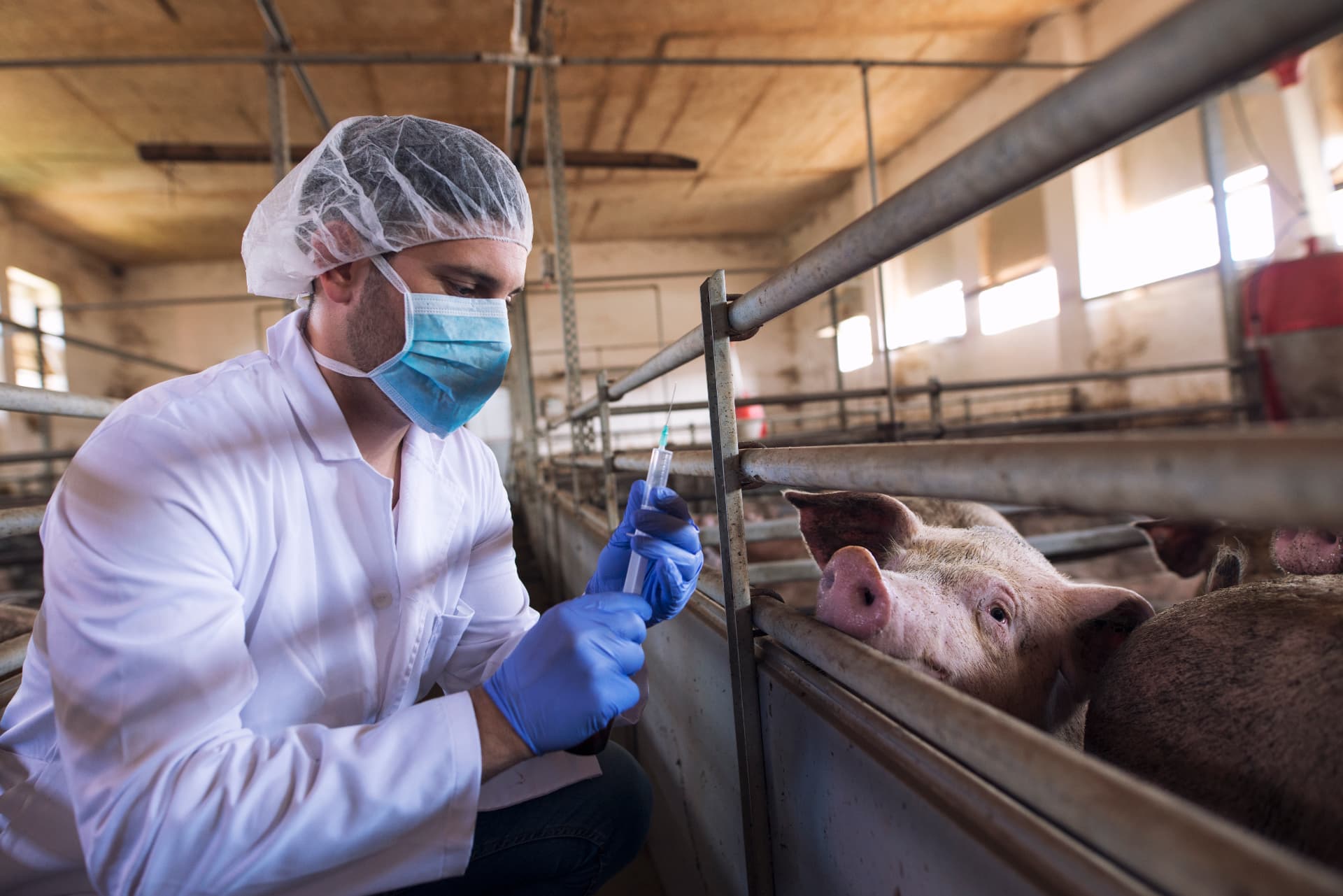
Pigs
Large White, Landrace, Duroc and indigenous pigs
Poultry
Broilers, layers, indigenous chickens, ducks and guinea fowl
Fish
Tilapia and catfish
Rabbits & donkeys
Where relevant to smallholder and mixed-farming systems
Cattle services
- January Disease (Theileria parva) screening and management plans
- Brucellosis (Brucella abortus), TB (Mycobacterium bovis), anaplasmosis (Anaplasma marginale/centrale), babesiosis (Babesia bovis/bigemina) and heartwater (Ehrlichia ruminantium) screening
- Genomic breeding values for meat quality, milk yield and disease resistance
- Genetic selection for hardiness and productivity
- Semen evaluation for Artificial Insemination (AI) and AIs
- Mastitis panel
- Paddock and grazing system design
Disease & species coverage
Priority animal health issues
- January Disease (Theileria parva)
- Anaplasmosis (Anaplasma marginale/centrale)
- Babesiosis/redwater (Babesia bovis/bigemina)
- Heartwater (Ehrlichia ruminantium)
- Brucellosis (Brucella abortus)
- Bovine tuberculosis (Mycobacterium bovis)
- Mastitis (Staphylococcus aureus, Streptococcus agalactiae, Escherichia coli)
- Foot-and-mouth disease
- Lumpy skin disease
- Anthrax (Bacillus anthracis) and blackleg (Clostridium chauvoei)
- PPR in goats and sheep
- African swine fever and swine erysipelas (Erysipelothrix rhusiopathiae)
- Newcastle disease, Gumboro/IBD, infectious bronchitis, avian influenza and fowl pox
- Internal parasites, coccidiosis (Eimeria spp.) and fasciolosis (Fasciola hepatica)
- Tick-borne disease complexes and acaricide resistance, including Arbotus efficacy testing
Services
Request a service from this division
Livestock Disease Panel
Species-specific surveillance panels for herds and flocks, with a special focus on January Disease and other regional threats. Includes acaricide efficacy testing — for example, Arbotus — to manage tick populations.
ExploreLivestock Genotyping
Parentage, trait and breeding-value genotyping. We use genetic selection to identify superior traits for meat quality, growth rate, fertility and disease resistance, informing your Artificial Insemination (AI) and AIs strategy.
ExploreBreeding Programme Design
AI, AIs, embryo transfer and selection planning for your herd. We integrate genetics, selection, herd management and facility design — including paddocking and herd pens — to create a holistic and profitable breeding programme.
ExploreIntegrated Herd Management
Comprehensive consulting for herd management, including paddocking strategies, herd pen optimisation for feedlotting, chicken run design for poultry operations and biosecurity infrastructure, all aimed at improving animal welfare and meat quality.
ExploreLaboratories
Where this work is done
Animal Diagnostics Laboratory
Veterinary pathology, herd health and January Disease diagnostics.
ExploreGenomics Laboratory
Sequencing, genotyping and bioinformatics for genetic selection.
ExploreMicrobiology Laboratory
Pathogen isolation, culture and resistance profiling — including acaricide resistance for Arbotus and other dips/sprays.
ExploreResearch
Active programmes
Genomics of Heat-Tolerant Indigenous Cattle
Crossbreeding for milk yield is eroding the heat and disease tolerance of indigenous breeds. We are using genomic selection to identify and propagate genes for resilience, including tolerance to January Disease.
ExploreSustainable Tick-Borne Disease Management
Investigating integrated strategies to combat January Disease, including the evaluation of acaricides such as Arbotus, strategic paddocking to break tick lifecycles, and breeding for genetic resistance.
ExploreHow we work
From the field to a finished programme
Field assessment
Soil, water and herd history captured on-site. Herd management practices, paddocking, herd pens, feedlot pens and chicken runs are evaluated and geo-referenced per block.
Laboratory analysis
Nutrients, pathogens — including January Disease — and microbiome profiled in accredited laboratories. Meat quality and acaricide resistance can also be analysed.
Programme design
Inputs, cultivars and calendars matched to the block and the season. Breeding and genetic selection plans, AI/AIs schedules, infrastructure layout and herd health protocols are integrated into one plan.
Season monitoring
Yield, quality and soil indicators tracked and adjusted in-season. Herd health metrics, breeding success rates, AI conception rates and meat quality parameters are also monitored for continuous improvement.
Let us build your season plan
Get in touch
Speak with an agronomist, a veterinarian and a laboratory scientist together — one plan, one team, one accountable outcome.